Real Celebrities Live Forever!
Enter your birthday to meet your past celebrity birthday twins.
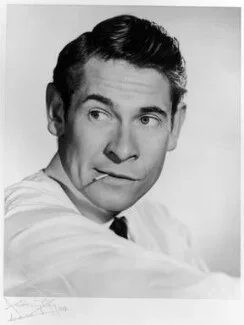
https://en.wikipedia.org/wiki/Stanley_Baxter
Stanley Baxter
Birthday:
24 May, 1926
Date of Death:
11 Dec, 2025
Cause of death:
Publicly undisclosed
Nationality:
Scottish
Famous As:
Actor
Age at the time of death:
99
Stanley Livingstone Baxter's Quote's
The Man Who Made Millions Laugh with a Glasgow Smile
Stanley Livingstone Baxter was an actor, impressionist, writer, and television pioneer whose imagination and versatility helped define British entertainment for generations. Over a career spanning more than six decades, Baxter became known for his dazzling transformations, razor-sharp wit, and deep love of character. Whether parodying public figures, embodying exaggerated Glaswegian types, or disappearing into elaborate sketches, he brought theatre, satire, and warmth together in a way few performers ever achieved.
Early Life: A Performer Takes Shape in Glasgow
Born on 24 May 1926 in Glasgow, Stanley Baxter grew up in the city’s West End, surrounded by the rhythms, voices, and social rituals that would later fuel his comedy. His talent emerged early. Encouraged by his mother, he began entertaining at local church events and community gatherings, discovering not only a knack for performance but a genuine joy in making people laugh.
As a child, Baxter found his way onto the airwaves through BBC Scotland’s “Children’s Hour,” an experience that introduced him to professional performance while allowing him to experiment with voices, timing, and character—skills that would become his trademark. Even then, it was clear that he wasn’t merely telling jokes; he was inhabiting roles.
Education and Early Influences
Baxter was educated at Hillhead High School, but his most formative lessons came from the stage rather than the classroom. During his national service, he joined the Combined Services Entertainment Unit, performing for troops and learning how to hold an audience under unpredictable conditions. These years sharpened his adaptability and reinforced his instinct for reading a room—an invaluable skill for a performer whose work depended on nuance and timing.
Career Journey: Reinventing Comedy Again and Again
Theatre, Variety, and Pantomime
After the war, Baxter returned to Scotland and immersed himself in variety theatre. Throughout the 1940s, he became a familiar figure on Glasgow stages, developing his presence in pantomime and live revue. Pantomime, in particular, suited his theatrical instincts—its bold characters, visual humour, and playful exaggeration allowing him to stretch his creative muscles.
Television Breakthrough and National Fame
Baxter’s transition to television in the 1950s marked a turning point. His growing reputation led to wider exposure, and by 1959, his work on the satirical sketch show On the Bright Side brought him national attention. Audiences were captivated by his impressions and his ability to move seamlessly between absurdity and sharp observation.
That success paved the way for The Stanley Baxter Show, which debuted in 1963 on the BBC. Running in various forms until 1971, the programme became one of the defining sketch shows of its era. Baxter’s meticulous attention to costume, staging, and character made each episode feel theatrical and inventive. Among his most enduring creations was “Parliamo Glasgow,” a comic sketch that playfully presented the city’s dialect as if it were a foreign language—both a celebration and a gentle satire of local speech.
In the early 1970s, Baxter moved to London Weekend Television, producing ambitious comedy specials with high production values and elaborate set pieces. These programmes drew enormous audiences and set new standards for what television comedy could look like.
Film, Radio, and Later Work
Alongside television, Baxter appeared in a range of films, including Geordie, Very Important Person, and The Fast Lady, demonstrating that his talent extended beyond sketches. In later years, he returned to radio, where his love of storytelling and character found a new outlet. His work on The Stanley Baxter Playhouse showcased a more reflective, narrative style, proving that his creative voice remained strong well into his later life.
Personal Life: A Quiet Complexity Behind the Curtain
Despite his public persona, Baxter was a deeply private man. He was married to actress Moira Robertson for 46 years, until she died in 1997. For much of his life, Baxter kept his personal struggles out of the public eye. Only later, in a biography published in 2020, did he speak openly about being gay and the difficulties of navigating personal truth in a less accepting era.
In his later years, Baxter lived at Denville Hall, a care home for members of the entertainment profession, remaining connected to the world he had helped shape. He died on 11 December 2025, just months before his 100th birthday.
Legacy: A Master of Character and Craft
Stanley Baxter left a blueprint for imaginative comedy. His influence can be felt in generations of performers who value character, theatricality, and precision as much as punchlines. He showed that comedy could be visually rich, intellectually sharp, and emotionally resonant all at once.
From a young boy entertaining Glasgow crowds to a national treasure who redefined television comedy, Baxter’s life was a testament to creativity, resilience, and transformation. His characters may have been exaggerated, but his impact was real and enduring. In the story of British entertainment, Stanley Baxter remains unforgettable: a performer who didn’t just make people laugh, but invited them into entire worlds of his own creation.
Name:
Stanley Livingstone Baxter
Popular Name:
Stanley Baxter
Gender:
Male
Cause of Death:
Publicly undisclosed
Spouse:
Place of Birth:
Glasgow, Scotland, United Kingdom
Place of Death:
London, United Kingdom
Famous As / Occupation:
Personality Type
Debater: Stanley Baxter was the kind of mind that couldn’t stop turning everyday speech, habits, and authority figures into playful intellectual puzzles for an audience to enjoy.
He was a trained impressionist who could mimic dozens of public figures, often rehearsing voices obsessively in private.
Baxter was an accomplished writer and co-wrote his own scripts, taking unusual creative control for a television performer of his era.
Despite his fame, he remained intensely private and largely avoided the celebrity circuit.
Stanley Baxter was one of Britain’s most successful television comedians of the 1960s and 1970s, with The Stanley Baxter Show drawing audiences of many millions and redefining sketch comedy through character-driven satire.
He was widely praised for his impressions, visual comedy, and theatrical ambition, influencing later generations of performers.
In recognition of his contribution to the arts, he was appointed Officer of the Order of the British Empire (OBE) and later Commander of the Order of the British Empire (CBE).
His work earned him a lasting reputation as one of Scotland’s greatest entertainers.
Additional Links