Real Celebrities Live Forever!
Enter your birthday to meet your past celebrity birthday twins.
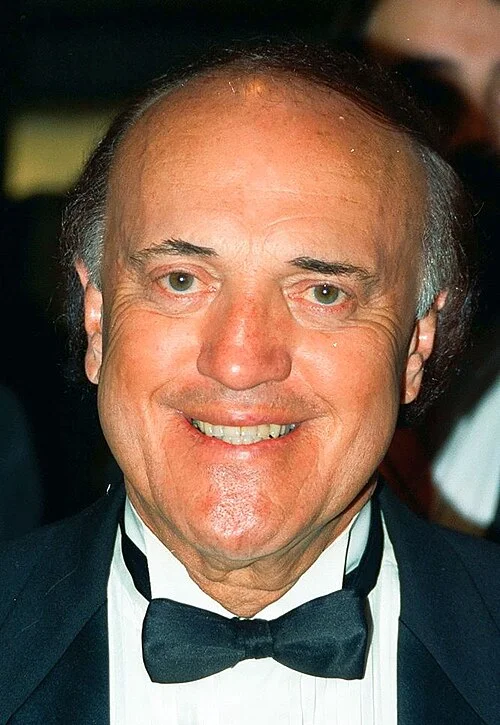
https://en.wikipedia.org/wiki/Peter_Arnett
Peter Arnett
Birthday:
13 Nov, 1934
Date of Death:
17 Dec, 2025
Cause of death:
Prostate Cancer
Nationality:
New Zealand-born, later a naturalised U.S. citizen.
Famous As:
Journalist
Age at the time of death:
91
Peter Gregg Arnett's Quote's
Peter Arnett is the quintessential eyewitness of modern conflict, a journalist whose fearless reporting and commitment to truth brought the realities of war into living rooms around the world. With an unflinching eye and a voice that captured both immediacy and nuance, he became a bridge between distant battlefields and the global audience, shaping how wars were understood in real time.
Early Life
Born in 1934 in Auckland, New Zealand, Peter John Arnett grew up far from the theatres of international conflict he would later cover. Raised in a working-class family, he learned early the value of perseverance and hard work, traits that would serve him well in his unpredictable profession. His early life in New Zealand was marked by curiosity and a desire to explore beyond his immediate surroundings, which would define his career. Even as a young man, he demonstrated a restless intellect, drawn to stories that mattered and to places where he could witness history unfolding.
Education
Arnett’s educational path laid the foundation for his career in journalism. He began at Auckland University, where he studied English literature, honing his storytelling skills and his precision with language. These formative years sharpened his ability to observe closely and convey human experiences compellingly, essential tools for a reporter destined to cover some of the world’s most dangerous conflicts.
Career Journey
Peter Arnett’s career journey can be traced in vivid phases, each marked by a commitment to frontline reporting. He began in New Zealand and Australia, gaining experience in local newsrooms before joining the Associated Press in 1961. His early assignments were a proving ground, allowing him to develop a reporting style defined by clarity, empathy, and courage.
The Vietnam War became Arnett’s defining crucible. Reporting for the Associated Press from 1962 to 1975, he bore witness to the full spectrum of the conflict’s human toll. His dispatches from the battlefield were unvarnished and compelling, bringing both strategy and tragedy into stark relief. His coverage earned him the 1966 Pulitzer Prize for International Reporting, a recognition of his relentless pursuit of truth under fire. One of his most memorable moments came in 1968 during the Tet Offensive, where his firsthand accounts conveyed the chaos, bravery, and despair of the moment with haunting immediacy.
After Vietnam, Arnett continued to cover global conflicts, demonstrating an uncanny ability to place himself at the centre of historical events. From the Gulf War in 1990–1991 to the Balkan conflicts, he remained committed to reporting from the frontlines, even when others hesitated. During the Gulf War, his live reporting from Baghdad captured the surreal and terrifying reality of warfare for a television audience, cementing his reputation as a journalist willing to confront danger to tell the story.
Personal Life
Despite the intensity of his career, Arnett’s personal life remained grounded. Known for his understated demeanour and quiet curiosity, he has often described his work as a calling rather than a pursuit of fame. Outside of reporting, he enjoys reflecting on the human stories behind headlines and has occasionally shared insights into the resilience and courage of those he has encountered around the world.
Legacy
Peter Arnett’s legacy is inseparable from the evolution of modern journalism. He redefined war reporting by blending vivid narrative with factual precision, creating a standard for journalists who followed. More than a chronicler of conflict, he became a witness to history, giving voice to the people and experiences that might otherwise have been lost. Today, he is remembered not just for the stories he reported, but for the unyielding courage and integrity that allowed those stories to resonate far beyond the battlefield.
Name:
Peter Gregg Arnett
Popular Name:
Peter Arnett
Gender:
Male
Cause of Death:
Prostate Cancer
Spouse:
Place of Birth:
Riverton / Aparima, New Zealand
Place of Death:
Newport Beach, California, United States
Famous As / Occupation:
Personality Type
Logician: Peter Arnett is a quiet observer of the world, driven by curiosity and a steadfast pursuit of truth, even in the heart of chaos.
Peter Arnett started his journalism career as a copyboy before working his way up to frontline reporting.
He has a reputation for carrying only minimal equipment, preferring observation over technology.
Despite reporting from war zones, he is known for his quiet, reflective demeanour and understated humour off-camera.
Peter Arnett won the Pulitzer Prize for International Reporting in 1966 for his coverage of the Vietnam War, highlighting his courage and commitment to frontline journalism.
He became internationally recognised for his live reporting during the Gulf War, bringing real-time coverage of the war into people’s homes.
Over his career, he covered some of the most significant conflicts of the late 20th century, including Vietnam, the Gulf War, and the Balkan wars, earning numerous accolades for his fearless reporting.
His work set a standard for war correspondence, blending human stories with the stark realities of conflict.
Additional Links