Real Celebrities Live Forever!
Enter your birthday to meet your past celebrity birthday twins.
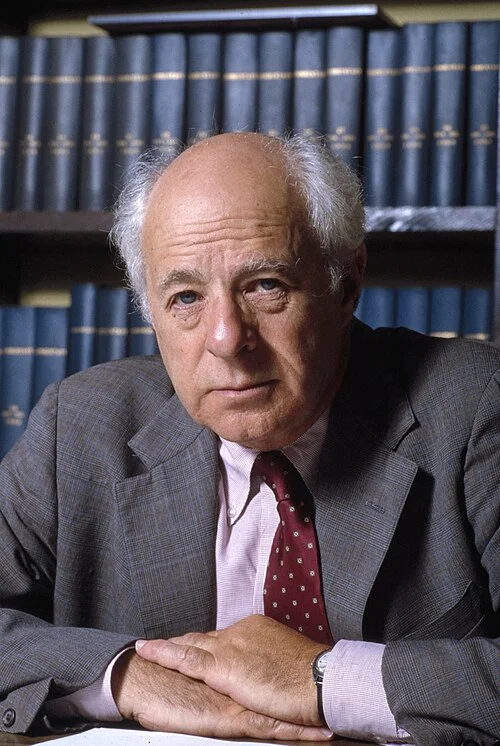
https://en.wikipedia.org/wiki/Norman_Podhoretz
Norman Podhoretz
Birthday:
16 Jan, 1930
Date of Death:
16 Dec, 2025
Cause of death:
Complications from pneumonia
Nationality:
American
Famous As:
American magazine editor
Age at the time of death:
95
Norman Harold Podhoretz's Quote's
The Maverick Mind of American Commentary
Norman Podhoretz has long been a figure who embodies the restless curiosity and bold intellect of American letters. A writer, editor, and critic, he carved out a space in the cultural and political landscape where ideas were not merely debated but challenged, refined, and sometimes provoked. Throughout his career, Podhoretz became known for his fearless engagement with controversial topics, his sharp analytical mind, and his dedication to shaping public discourse—qualities that made him both admired and contested in equal measure.
Early Life: Roots in Brooklyn
Born on January 16, 1930, in Brooklyn, New York, Podhoretz grew up in a Jewish household that valued education and debate. His parents, Samuel and Celia Podhoretz, instilled in him a deep respect for learning, a trait that would define his life. Brooklyn in the 1930s and 1940s was a melting pot of cultures and ideas, and young Norman absorbed the energy of the streets and the rigour of his home life. His early exposure to literature and politics sparked a fascination with the power of words to shape society, a fascination that would carry him far beyond his Brooklyn roots.
Education: Formative Years of an Intellectual
Podhoretz attended Erasmus Hall High School, a crucible for bright and ambitious students, where he first showed signs of his intellectual audacity. He went on to Columbia University, earning a Bachelor of Arts in 1951. Columbia was more than an academic stop; it was a proving ground. Surrounded by a vibrant community of thinkers, Podhoretz honed his skills as a writer and critic, developing a voice that was incisive, candid, and often unafraid to confront orthodoxies. His academic foundation, steeped in the liberal arts and infused with the ferment of postwar intellectual life, shaped the clarity and rigour of his later work.
Career: From Literary Critic to Cultural Provocateur
Podhoretz’s career unfolded in distinct phases, each marked by influence and occasional controversy.
Early Career: After graduation, he began writing for journals and magazines, building a reputation as a perceptive and uncompromising critic. His early essays, marked by erudition and sharp wit, drew attention for their clarity and insight. By the late 1950s, he became a rising voice among New York intellectuals, engaging debates on literature, culture, and politics with unmatched vigour.
The Commentary Era: In 1960, Podhoretz joined Commentary, the magazine of the American Jewish Committee, which would become the defining platform of his career. Initially an assistant editor, he rose to editor in 1960 and held that position for nearly four decades. Under his stewardship, Commentary became a central venue for discussions on Jewish identity, American politics, and the Cold War world. Podhoretz’s tenure saw him champion neoconservative ideas and challenge both the left and the establishment, reshaping the magazine into a powerhouse of intellectual influence. He was unafraid to tackle contentious issues, from the Vietnam War to the evolution of American liberalism, and his editorials often sparked nationwide debate.
Later Career: Even after stepping down as editor in 1995, Podhoretz remained an influential commentator and author. His writings continued to grapple with the moral and political challenges of contemporary society, reflecting the breadth of his experience and his unwavering commitment to intellectual honesty.
Personal Life: Beyond the Public Eye
Norman Podhoretz married Midge Decter, a fellow writer and influential figure in American conservatism, and their partnership became both a personal and intellectual collaboration. Together, they were central to the circles of writers and thinkers that shaped mid-20th-century political thought. Known for his disciplined work ethic and lifelong curiosity, Podhoretz also displayed a wry sense of humour, often weaving subtle cultural observations into his essays.
Legacy: Shaping Ideas, Shaping Debate
Podhoretz’s legacy is that of a fearless thinker who refused to settle for conventional wisdom. He influenced generations of writers, editors, and policymakers, leaving an indelible mark on the landscape of American letters and political thought. Through his essays, editorials, and mentorship, he demonstrated the power of ideas to challenge, provoke, and illuminate. He is remembered not just as a critic or editor but as a vital participant in the conversation that defines American public life—a voice that demanded attention, reflection, and, above all, thought.
Name:
Norman Harold Podhoretz
Popular Name:
Norman Podhoretz
Gender:
Male
Cause of Death:
Complications from pneumonia
Spouse:
Place of Birth:
New York, New York, United States
Place of Death:
New York, New York, United States
Famous As / Occupation:
Personality Type
Commander: Norman Podhoretz was a man who didn’t just argue ideas. he marshalled them, sharpened them, and sent them into the public square with authority.
He famously described his ideological shift from liberalism as a slow, painful break rather than a sudden conversion.
His home became a frequent gathering place for writers and thinkers who would later dominate American political commentary.
He continued writing and publishing well into his eighties, long after stepping down from editorial leadership.
Norman Podhoretz’s most enduring achievement was his nearly thirty-five-year tenure as editor of Commentary, during which he transformed the magazine into one of the most influential intellectual journals in the United States.
Through his essays and books, he became a central architect of neoconservative thought, shaping debates on culture, foreign policy, and American identity from the Cold War through the post-9/11 era.
His influence extended well beyond publishing, reaching policymakers, academics, and public intellectuals across generations.
In recognition of his impact on American culture and ideas, he was awarded the Presidential Medal of Freedom in 2018.
Additional Links