Real Celebrities Live Forever!
Enter your birthday to meet your past celebrity birthday twins.
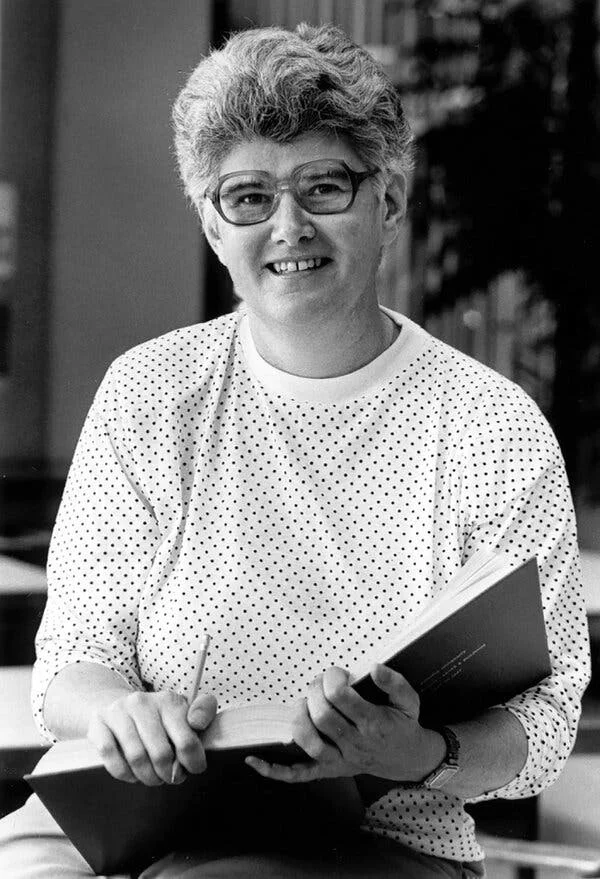
https://en.wikipedia.org/wiki/Margaret_W._Rossiter
Margaret W. Rossiter
Birthday:
08 Jul, 1944
Date of Death:
03 Aug, 2025
Cause of death:
Complication from a fall
Nationality:
American
Famous As:
American historian of science
Age at the time of death:
81
Margaret W. Rossiter's Quote's
Margaret W. Rossiter is a pioneering historian whose work has transformed the way we understand the role of women in science. Through meticulous research and compelling storytelling, she revealed the hidden struggles and triumphs of women scientists, challenging conventional narratives and inspiring generations to rethink both history and the present. Rossiter’s legacy is not only scholarly but deeply human—shining a light on voices that were long overlooked.
Early Life: Curiosity Takes Root
Born in 1933 in New York City, Margaret Rossiter grew up in a family that valued intellect and inquiry. Her parents encouraged her love of reading and learning, fostering an early curiosity about the world. Even as a child, she was fascinated by stories of discovery—scientists in laboratories, inventors in workshops, explorers charting unknown lands. These tales planted the seeds for a lifelong quest: to uncover stories that had been buried or ignored.
Rossiter’s upbringing in a bustling, dynamic city exposed her to a wide spectrum of ideas and cultures, nurturing both critical thinking and empathy. It was this combination—a rigorous mind and a compassionate perspective—that would define her approach to history.
Education: Crafting the Scholar
Rossiter pursued her academic path with clarity and determination. She earned a Bachelor’s degree in history from Radcliffe College, where she first began examining the intersections of science, society, and gender. Fascinated by the stories of women whose contributions were minimized or erased, she set out to document the invisible threads that connected their work to the broader scientific enterprise.
She went on to complete her Ph.D. at Harvard University, focusing on the history of science. Her early research revealed a stark reality: women had been systematically excluded, ignored, or forgotten in scientific histories. Rossiter’s education honed both her analytical rigor and her narrative skill, equipping her to tell these stories with authority and clarity.
Career Journey: Chronicling the Overlooked
Early Career: Discovering the Patterns
In the 1960s and 1970s, Rossiter began publishing studies on women in science, drawing attention to the obstacles they faced and the strategies they used to succeed despite systemic barriers. She identified a recurring phenomenon she called the “Matilda Effect”—the systematic undervaluing of women’s scientific achievements, often credited instead to male colleagues. This insight became one of her most influential contributions to the field.
Major Achievements: Shaping the Field of History of Science
Rossiter’s 1982 book, Women Scientists in America, was a landmark work that combined exhaustive research with compelling narrative. She traced the struggles, achievements, and perseverance of women scientists across centuries, documenting not only their successes but the structural challenges that constrained them. The book became a cornerstone for both historians and advocates, providing a framework to understand gender dynamics in science.
Over the next decades, Rossiter continued to publish, lecture, and mentor, broadening the scope of history of science to include perspectives that had long been ignored. She helped establish rigorous standards for documenting women’s contributions, ensuring that future generations would have a more complete and accurate understanding of scientific history.
Later Career: Advocate, Mentor, and Storyteller
In her later career, Rossiter balanced research with advocacy, mentoring young historians and scientists alike. She emphasized the importance of context, nuance, and empathy in historical work, encouraging scholars to consider the human dimensions behind scientific discovery. Even as her own research delved into archives and data, she remained committed to the idea that history is a living dialogue between past and present.
Personal Life: The Scholar with Heart
Margaret Rossiter is known for her warmth, humility, and dedication. Colleagues describe her as a careful listener, a generous mentor, and a tireless advocate for fairness in scholarship. Her personal life reflects the same curiosity and empathy that define her work—she remains deeply engaged with the communities of history, science, and education, always encouraging inquiry and dialogue.
Legacy: Bringing Hidden Stories to Light
Margaret W. Rossiter’s legacy is profound. She changed how historians, scientists, and the public understand the contributions of women in science, ensuring that stories of perseverance, brilliance, and creativity are recognized and celebrated. Her concept of the “Matilda Effect” has entered both academic and popular discourse, providing a lens through which to examine equity, recognition, and the dynamics of power.
Through her research, writing, and mentorship, Rossiter has illuminated paths for future generations, showing that history is not only about recording the past but about shaping the future. Her work reminds us that progress is often hidden in overlooked stories—and that telling those stories can change the world.
Name:
Margaret W. Rossiter
Popular Name:
Margaret W. Rossiter
Gender:
Female
Cause of Death:
Complication from a fall
Spouse:
Place of Birth:
Malden, Massachusetts, U.S.
Place of Death:
Salem, Massachusetts, U.S.
Occupation / Profession:
Personality Type
Advocate: Margaret W. Rossiter was a deeply principled and insightful historian whose lifelong mission to bring women’s contributions to science into clear view blended meticulous scholarship with profound empathy.
Margaret W Rossiter is a historian of science known for her work on the contributions of women in science.
She coined the term “Matilda Effect” to describe the systematic undervaluation of women scientists’ achievements.
Rossiter has won multiple awards for her scholarship, including the prestigious Sarton Medal for history of science.
Her research has highlighted the historical barriers that prevented women from gaining recognition in scientific fields.
Her influential book trilogy also earned major prizes, and in recognition of her impact, a major history of science society renamed its Women’s Prize in her honor.
She was also elected a Fellow of the American Association for the Advancement of Science and received multiple National Science Foundation grants throughout her career.
Margaret W Rossiter received numerous prestigious awards for her groundbreaking work on women in science, including a Guggenheim Fellowship, a MacArthur “genius grant,” and the George Sarton Medal for lifetime scholarly achievement.