Real Celebrities Live Forever!
Enter your birthday to meet your past celebrity birthday twins.
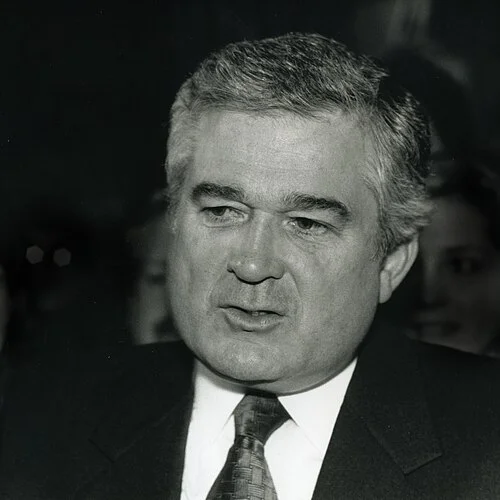
https://en.wikipedia.org/wiki/Lou_Gerstner
Lou Gerstner
Birthday:
01 Mar, 1942
Date of Death:
27 Dec, 2025
Cause of death:
Publicly undisclosed
Nationality:
American
Famous As:
IBM Chairman
Age at the time of death:
83
Louis Vincent Gerstner Jr.'s Quote's
Lou Gerstner is a transformative figure in American business, a leader whose steady hand and pragmatic vision reshaped one of the world’s most iconic companies. Known for his ability to navigate complex crises with clarity and resolve, he is the rare executive who blends analytical rigour with an intuitive understanding of people and culture. Gerstner’s story is not one of inherited advantage or dramatic flair but of disciplined observation, thoughtful decision-making, and the courage to challenge convention when it matters most.
Early Life
Born in 1942 in Endicott, New York, Louis V. Gerstner Jr. grew up in a middle-class family in a town shaped by the presence of IBM, the company where he would later leave a lasting mark. His father worked in sales, instilling in him a respect for hard work and accountability, while his mother nurtured a sense of curiosity and independence. The small, industrious community of Endicott fostered a pragmatic mindset in Gerstner from an early age, teaching him the value of discipline, consistency, and understanding people—not just systems.
Education
Gerstner’s academic path reflected both ambition and adaptability. He attended Phillips Exeter Academy, a rigorous preparatory school in New Hampshire, where he excelled academically and developed an appreciation for debate and strategic thinking. He went on to earn a Bachelor of Arts in Engineering from Dartmouth College in 1964, blending technical knowledge with a liberal arts sensibility—a foundation that would later enable him to bridge engineering, operations, and leadership in complex corporate settings. Following this, he pursued an MBA at Harvard Business School, graduating in 1966, further honing his skills in finance, management, and organisational strategy.
Career Journey
Early Career
Gerstner began his career in consulting at McKinsey & Company, where he quickly gained a reputation for solving tough operational challenges and advising companies on strategy and efficiency. His early exposure to diverse industries and business models gave him a broad perspective, emphasising that successful leadership requires both vision and attention to execution.
Turning Point at RJR Nabisco
In 1986, Gerstner joined RJR Nabisco during a period of upheaval following the infamous leveraged buyout chronicled in Barbarians at the Gate. As president and COO, he demonstrated his ability to stabilise a complex organisation under pressure, refining his talent for operational discipline and strategic clarity. This period cemented his reputation as a leader who could not only navigate crises but also reshape corporate culture to deliver sustainable results.
IBM: Reinventing a Giant
In 1993, Gerstner took on what many considered an impossible task: leading IBM, a company struggling with declining profits, bloated bureaucracy, and a culture resistant to change. He approached IBM not as a technologist but as a pragmatist, famously asserting that the company needed to focus on customers and markets rather than internal engineering debates. Under his leadership, IBM shifted from a hardware-centric model to a service-oriented business, pioneering consulting and IT solutions that would define the company’s future. Gerstner’s tenure was marked by tough decisions, including restructuring, divesting unprofitable units, and reorienting the company around a single, unified vision. By the time he retired in 2002, IBM had returned to profitability and regained its position as a technology leader, proving the transformative power of disciplined leadership and cultural change.
Personal Life
Despite his high-profile corporate career, Gerstner has remained grounded in family life. He is married and has children, balancing his intense professional commitments with a dedication to personal relationships. Known for his unpretentious demeanour, he often emphasises pragmatism over showmanship, a trait that endeared him to colleagues and helped him lead with credibility and authenticity.
Legacy
Lou Gerstner’s legacy is one of revival and reinvention. He demonstrated that even the most storied institutions can pivot and thrive under the right leadership, showing that culture, focus, and disciplined execution matter as much as strategy or technology. Today, he is remembered not only as the CEO who saved IBM but as a model of thoughtful, principled leadership—an executive who combined intellect, empathy, and courage to leave a lasting imprint on one of the world’s great companies.
Name:
Louis Vincent Gerstner Jr.
Popular Name:
Lou Gerstner
Gender:
Male
Cause of Death:
Publicly undisclosed
Spouse:
Place of Birth:
Mineola, New York, United States
Place of Death:
Jupiter, Florida, United States
Famous As / Occupation:
Personality Type
Commander: Lou Gerstner sees the path where others see obstacles, and builds the bridge while leading the way across it.
Gerstner is known for his habit of walking IBM’s factory floors to understand operations firsthand.
Despite his corporate stature, he prefers simple routines and is often described as unpretentious by colleagues.
He was initially reluctant to take the IBM CEO role, believing an outsider could never succeed, yet ultimately became the architect of its revival.
Lou Gerstner is best known for leading IBM through a dramatic turnaround in the 1990s, transforming it from a struggling hardware company into a thriving services and consulting powerhouse.
He also served as CEO of RJR Nabisco, where he stabilised the company after its famous leveraged buyout turmoil.
Gerstner has received numerous accolades for his leadership, including being named one of the world’s top CEOs by Fortune and earning recognition for his influence on modern corporate strategy.
His approach to organisational culture and customer-focused transformation continues to be studied in business schools worldwide.
Additional Links