Real Celebrities Live Forever!
Enter your birthday to meet your past celebrity birthday twins.
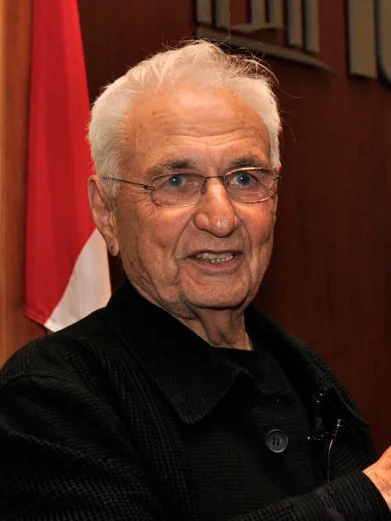
https://en.wikipedia.org/wiki/Frank_Gehry
Frank Gehry
Birthday:
28 Feb, 1929
Date of Death:
05 Dec, 2025
Cause of death:
Respiratory illness
Nationality:
American
Famous As:
American architect
Age at the time of death:
96
Frank Owen Gehry's Quote's
Frank Gehry is a visionary who reshaped the skyline of modern architecture with structures that seem to defy gravity and convention. Renowned for his daring forms, fluid lines, and innovative use of materials, Gehry transforms buildings into living sculptures, challenging the very notion of what architecture can be. His work is not merely functional—it is an experience, a conversation between structure, space, and imagination.
Early Life: A Foundation in Curiosity
Born Frank Owen Gehry, he grew up in a modest, working-class family in Canada before moving to Los Angeles as a child. From an early age, he displayed a restless curiosity and a fascination with the built environment. Neighborhood walks were not just strolls; they were lessons in observation, with Gehry mentally dissecting houses, factories, and street layouts.
Family life was grounded and pragmatic, yet supportive of his unconventional interests. His father, a businessman, and mother, a homemaker, encouraged diligence but could not have predicted that their son would one day challenge architectural norms on a global scale. Even as a teenager, Gehry’s notebooks overflowed with sketches of structures that didn’t yet exist—a hint of the imagination that would define his career.
Education: The Unorthodox Path
Gehry’s formal education was as unconventional as his later designs. Initially enrolling in a traditional architecture program, he struggled with the rigid constraints of classical training. It was during this time that he began experimenting with unusual materials and abstract forms, pushing the boundaries of what was taught in classrooms.
His studies laid the groundwork for technical expertise, but it was Gehry’s relentless curiosity outside the classroom—sketching, building models, and visiting construction sites—that cultivated the intuition and fearless creativity that would characterize his work.
Career Journey: Breaking the Mold
Early Career: From Conventional to Experimental
Gehry began his professional life working with established firms, absorbing conventional techniques while quietly nurturing his own radical ideas. The transition from traditional designs to bold experimentation was gradual, marked by a willingness to question norms and challenge the expectations of clients and peers alike.
Major Achievements: Iconic Forms and Global Recognition
As Gehry embraced experimental forms, his reputation grew. He became known for structures that seem to move and breathe—buildings that play with curves, angles, and reflective surfaces. His designs often evoke surprise: a metallic wave here, a twisting tower there, each structure a physical manifestation of imagination.
A distinctive aspect of his work is the use of unconventional materials in unexpected ways, turning industrial elements into objects of beauty. This approach not only redefined aesthetics but also inspired an entire generation of architects to think beyond rectangles and grids.
Later Career: Reflection and Influence
Over decades, Gehry’s portfolio expanded internationally, from cultural landmarks to private residences, each project demonstrating a willingness to experiment while maintaining a poetic sense of space. In his later career, he embraced mentorship, encouraging younger architects to pursue bold ideas and prioritize creativity alongside practicality. His offices became incubators for innovation, reflecting his belief that architecture is both a craft and an art form.
Personal Life: Humanity in Form
Though intensely focused on his work, Gehry has maintained a grounded personal life. He is known for his warmth, humor, and approachability—qualities that often emerge in interviews and public appearances. Outside the studio, he enjoys art, music, and the simple pleasures of observing the world around him.
These facets humanize a figure often associated with monumental structures, reminding us that the mind behind these awe-inspiring forms is rooted in curiosity, observation, and playfulness.
Legacy: Architecture as Living Art
Frank Gehry’s impact is measured not only by the iconic buildings that punctuate skylines but by the philosophy he championed: that architecture can surprise, delight, and challenge perception. He has expanded the vocabulary of design, proving that buildings can be as expressive and dynamic as any painting or sculpture.
His legacy endures in the daring forms he leaves behind, the architects he inspires, and the public imagination he captures. Gehry’s work transforms everyday spaces into experiences, inviting everyone to see architecture not just as shelter, but as a living, breathing art form—an enduring testament to creativity without limits.
Name:
Frank Owen Gehry
Popular Name:
Frank Gehry
Gender:
Male
Cause of Death:
Respiratory illness
Spouse:
Place of Birth:
Toronto, Ontario, Canada
Place of Death:
Santa Monica, California, U.S.
Occupation / Profession:
Personality Type
Debater: Frank Gehry was a boldly imaginative and intellectually restless architect whose playful, unconventional approach redefined architectural form and constantly challenged norms while keeping a sharply curious and argumentative mind.
Frank Gehry is known for his innovative, sculptural architectural designs that often appear to defy traditional geometry.
His most famous work, the Guggenheim Museum in Bilbao, Spain, helped transform the city into a major cultural destination.
Gehry originally studied music before switching to architecture, which influences the rhythm and movement in his building designs.
Many of his designs use unconventional materials, such as chain-link fences and corrugated metal, to create unique textures and forms.
Frank Gehry, the famous architect, has received numerous prestigious awards, including the Pritzker Architecture Prize in 1989, which is often called the “Nobel Prize of architecture.” He also won the American Institute of Architects (AIA) Gold Medal in 1999 and the Royal Institute of British Architects (RIBA) Gold Medal in 1989, recognizing his innovative and sculptural approach to design.
His work continues to be celebrated worldwide for pushing the boundaries of modern architecture.